

- Primary stage (lågstadiet) covers years 1–3 of grundskola and is for children aged 7–9
- It follows preschool class and is part of Sweden’s unified compulsory school system
- It is free and mandatory as part of compulsory education
- Focus is on foundational literacy and numeracy, early English learning, social development, and collaborative skills
- Sweden does not separate primary and lower secondary into different schools — grundskola is one school form divided into three internal stages
e.u./e.e.a. citizens
Your child can start once you have moved and are registered with your municipality.
non-e.u./e.e.a. citizens
Your child starts after residence permits are approved and you have moved to Sweden.
asylum/t.p.d.
Children who are seeking asylum, or covered by the EU Temporary Protection Directive (TPD), also usually have the right to attend school in Sweden.
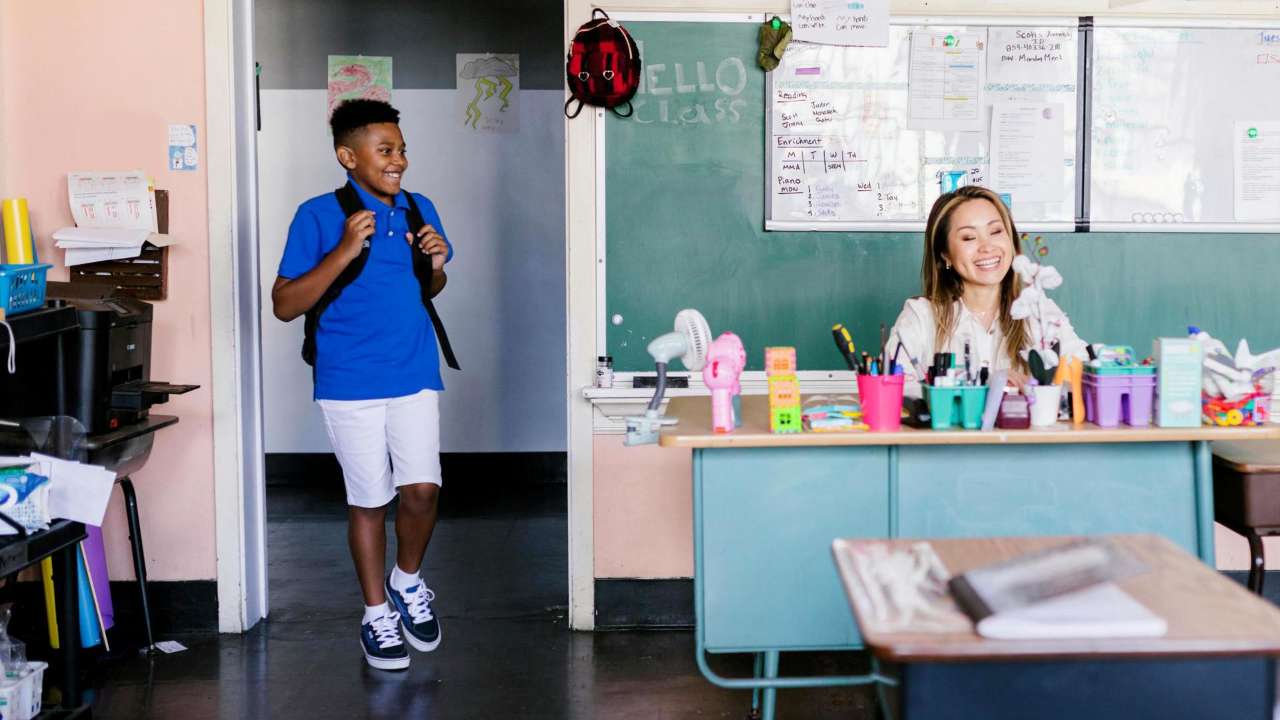
The primary stage of compulsory school is where children begin building the foundations for future learning and school life. Here’s how years 1–3 are structured, what children learn during this stage, and how the primary years fit into Sweden’s wider school system.
The Primary stage (lågstadiet) is the point where many families feel, “Okay, school has truly begun.”
Children leave preschool and join grundskola, starting with primary stage (years 1–3), usually ages 7–9.
Sweden keeps all 9 years of compulsory schooling as one single school form. Instead of splitting primary and lower‑secondary into different schools, Sweden divides the whole period into 3 stages. These stage names are used everywhere in Swedish and in English, and help families understand the structure of the school system.
At this early stage, the national curriculum focuses on the most important basics: learning to read and write, building maths skills, and starting Swedish and English. Children also begin developing good learning habits like asking questions, working together, and exploring new ideas.
The goals of the Primary stage, and how it fits into the whole school system, are described in Skolverket’s national curriculum and shown in the well‑known 3‑stage overview of grundskola.
- You can apply once you know which municipality you will live in
- Your child can start school after you arrive in Sweden and are registered there
Your child can start school once your family’s residence permits have been granted and you have moved to Sweden.
Some municipalities allow you to contact them or register your interest before you arrive. However, a school place can only be offered once you are living in and registered with the municipality.
Children of compulsory school age are entitled to education once they live in Sweden.
You apply through the school admissions system run by your municipality.
- You list your preferred schools (the number of choices varies by municipality)
- Placement is decided based on:
- how close the school is to your registered home address
- whether siblings already attend the school
- availability of places
To submit an application, you usually log in using a Swedish e-ID (such as BankID or Freja eID+).
If you do not yet have access to e-ID, you should contact the municipality to ask about alternative application methods.
☐ Your child must be 7–9 years old (years 1–3 of grundskola)
☐ Education is compulsory and free of charge
☐ Apply through your municipality’s school portal
☐ Rank your preferred schools in order
☐ Placement is usually based on proximity and sibling priority
☐ School starts in August (autumn term)
☐ After-school care (fritidshem) requires separate registration and fees
☐ Language support is available for children who do not speak Swedish
☐ If you move municipalities, you must reapply
- Primary stage (lågstadiet) covers Years 1–3 and is part of Sweden’s compulsory grundskola
- Education is free, including school meals. After-school care is income-based and optional
- The curriculum focuses on reading, writing, mathematics, early English, and social development
- You apply through your municipality, and placement is based on address, availability, and sometimes sibling priority
- Children who are new to Sweden have the right to language support and, where needed, study guidance in their mother tongue
if your child is seeking asylum or has temporary protection
Children usually have the right to attend school if they are:
- seeking asylum
- covered by the EU Temporary Protection Directive (TPD)
- staying in Sweden under similar protection arrangements
In these situations:
- the municipality helps arrange a school place after arrival
- residence permit approval is not always required before starting school
- the process may vary slightly between municipalities
- If you are settling in Sweden long term, choose a school close to home — proximity often affects placement
- Register early during the main application period (usually January–February)
- If your child is new to Swedish, ask the school about preparatory classes or study guidance support
- Consider registering for fritidshem if both guardians work or study — places can fill up
- Many services services easily once you have a personal identity number (personnummer), but getting one can take time, particularly if you have recently moved or your permit is still being processed
↗︎ Curriculum for compulsory schooling
↗︎ Learn more about the Swedish school system
↗︎ School Inspectorate — official schools inspectorate
↗︎ Get BankID
↗︎ Get Freja eID
stockholm
↗︎ Stockholm Stad School Portal — both municipal and independent schools
↗︎ Stockholm International School
gothenburg
↗︎ Göteborgs Stad – School and Childcare
↗︎ International School of the Gothenburg Region (ISGR)
malmö
↗︎ Malmö Stad – School and Preschool
national
how many schools can I choose?
You can usually rank several schools (often 3–6 depending on the municipality). You list them in order of preference, then, once you accept a placement offer, the application process ends.
when can I apply?
Applications usually open in January–February for the August school start. Late applications are processed after the main allocation round.
Check your municipality’s deadlines carefully.
how do I apply?
Apply online through your municipality’s school system using Swedish e-ID (BankID or Freja eID).
If you do not have e-ID, contact the municipality for alternative application methods.
Make sure your contact details are correct — offers are sent digitally.
what if my first choice is full?
Placement is usually based on home address, sibling priority, and available places. If your preferred school is full, you will be offered another school near your home.
can my child start without swedish?
Yes. Schools provide Swedish as a Second Language (SVA) and study guidance if needed.