

Mental-health treatment in Sweden usually begins at a local health clinic (vårdcentral). Treatment may include therapy, lifestyle support, or medication. Costs are subsidised and interpreters are available.
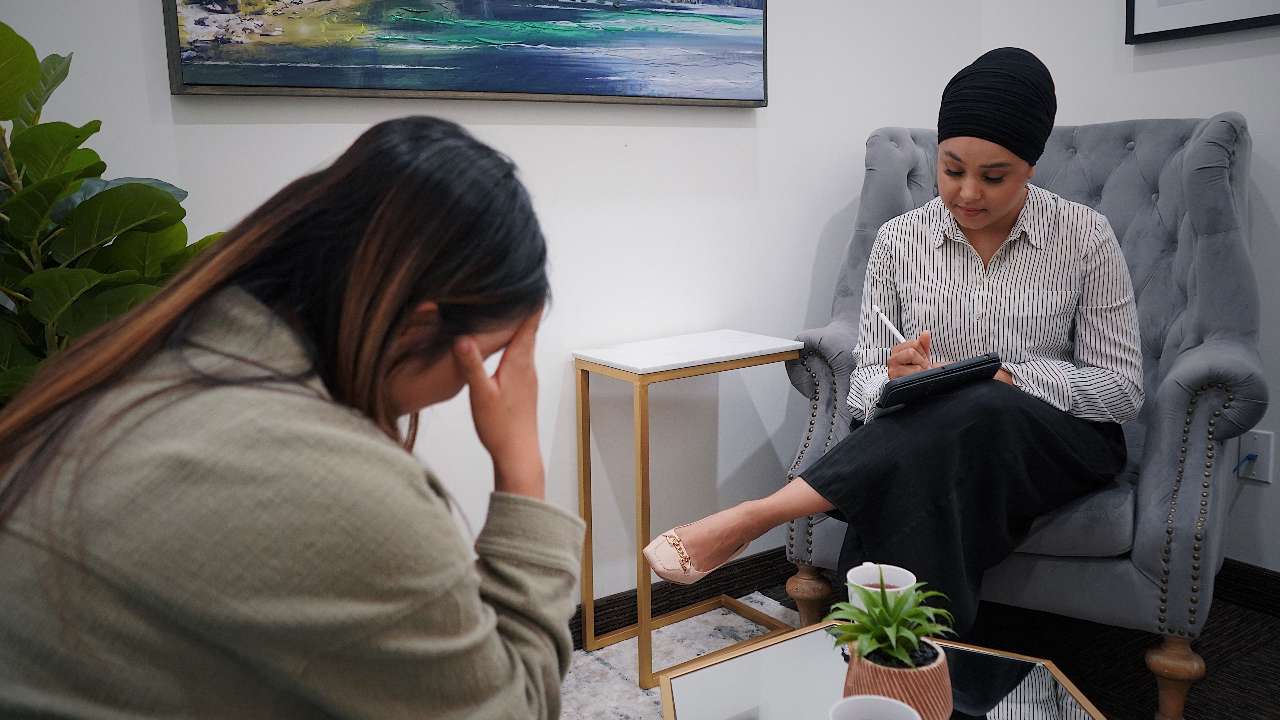
Sweden’s healthcare system includes mental health as standard care. The process may feel unfamiliar if you’re used to private healthcare or walk-in therapy systems. We walk you through how treatment works and what to expect.
Most importantly, help is available, interpreters can be arranged, and you do not need to navigate the system alone.
Call 112 immediately if you or someone you know is in danger or at risk of suicide.
Here’s a simple process guide to get you started:
step 1
☐ contact primary care (vårdcentral)
Your local health clinic is the first place to ask for help.
You can:
- Call the clinic or book an appointment online
- Say clearly: “I need help with my mental health”
- Ask for an interpreter if you don’t speak Swedish
- Ask for a longer appointment if you need more time to talk
You do not need to know exactly what is wrong before contacting them.
step 2
☐ assessment
At your first appointment, a doctor, nurse, or psychologist will talk with you.
They will:
- Ask about your symptoms (sleep, mood, stress, anxiety, trauma, etc.)
- Ask how your daily life is affected (work, studies, family, sleep)
- Ask about physical health and medications
- Decide what kind of help you need
At the end, they will explain the next step and make a plan with you.
step 3
☐ treatment
Most people start with talking therapy.
You may be offered:
cognitive behavioural therapy (c.b.t.)
- Practical therapy that teaches tools to manage thoughts, anxiety, stress, and depression.
counselling / supportive therapy
- Regular conversations to talk through problems, life changes, or emotional stress.
trauma-focused therapy
- Special support for people who experienced war, violence, or difficult life events.
You might also be offered:
- group therapy
- stress or sleep programs
Treatment plans are personal — you and your healthcare team decide together.
note on treatment culture
In Sweden, doctors usually focus on talking therapies and lifestyle changes first, and use medication only when necessary.
This is different from some countries, like the US, where medication may be prescribed more quickly or more widely.
Swedish care emphasizes:
- structured therapy (CBT, counselling, trauma support)
- lifestyle support (exercise, sleep routines, light therapy)
- medication only when needed, with careful follow-up
This approach aims to reduce unnecessary drug use while still providing effective care.
step 4
☐ medication
Medication is sometimes used together with therapy, not instead of it.
A doctor may suggest medication if symptoms are moderate or severe, or if therapy alone is not enough.
Common types:
antidepressants
- Help with depression, anxiety, panic, and PTSD. They usually take 2–6 weeks to start working
anti-anxiety medication
- Used short-term for strong anxiety, panic attacks, or crisis periods
sleep medication or sleep support
- Used for serious sleep problems. Usually short-term while you build better sleep habits
Your doctor will:
- explain benefits and side effects
- start with a low dose
- follow up regularly to see how you feel
You always have the right to ask questions or say no.
step 5
☐ lifestyle support
Healthcare in Sweden often includes daily life changes that support mental health.
You may be advised to:
be physically active
- Even light exercise (walking, swimming, gym classes) can reduce anxiety and depression
create regular sleep routines
- Going to bed and waking up at the same time helps mood and energy
use light therapy in winter
- Bright light lamps can help with low mood and lack of sunlight during dark months
These small habits are considered an important part of treatment, not just extra advice.
Typical mental health visit costs:
- Doctor/GP appointment: SEK 200–300
- Psychologist/therapist/psychiatric nurse: SEK 200–300
- Digital/video visit: same cost as physical visit
- Telephone consultation: usually free
high-cost protection (högkostnadsskydd)
- You pay a maximum of 1,450 SEK per year for healthcare visits
- After reaching this, visits are free for the rest of the 12-month period
children and young people
- Healthcare is free for children and young people (typically under 20)
Call 112 immediately if you or someone you know is in danger or at risk of suicide.
- Interpreter support is free: If you don’t speak Swedish, ask your clinic for an interpreter — it is covered by the healthcare system
- Children and youth: Mental-health care is usually free for people under 20. Some youth clinics extend this to up to 23-years old
- Costs for adults:
- Most outpatient visits: SEK 200–300
- High-cost protection (Högkostnadsskydd): maximum SEK 1,450 per year for healthcare visits; after that, visits are free
- Medication follow-up: Swedish doctors monitor medications closely — you will have regular check-ins to adjust doses and discuss side effects
- Confidentiality: All mental-health care in Sweden is confidential. You do not need to inform your employer, landlord, or school
- Call 112 immediately if you or someone you know is in danger or at risk of suicide
This article is for general informational purposes only and does not constitute medical, psychological, or therapeutic advice. It is not intended to diagnose, treat, or replace professional care. If you are experiencing mental health difficulties, please seek support from a qualified healthcare professional or local emergency services if needed.
↗︎ 112 (emergency contact info)
↗︎ 1177 healthcare guidance website
↗︎ Mind – Swedish mental health nonprofit (English available, helpline)
↗︎ Röda Korset – Red Cross support for refugees & asylum seekers
↗︎ Uppsala University – multilingual therapy
↗︎ Bris – support for children & youth in crisis (hotline, multilingual)
↗︎ Sveriges Kommuner och Regioner (SKR) – information on public healthcare access
⬢ How and where to get involved in arts and dance communities throughout Sweden
⬢ Learn about mental health symptoms
do I need insurance?
Registered residents can access mental health treatment through the public healthcare system.
do I have to pay for treatment through the public health service?
If you are registered in Sweden, mental health treatment is subsidised through the public healthcare system. A typical visit to a doctor or therapist costs SEK 200-300 depending on where you live.
can I request therapy instead of medication?
Yes. Treatment is collaborative.
do I need a referral to see a psychologist?
Usually yes. Start with your local clinic (vårdcentral). They can refer you to therapy or specialist services.
can I access therapy in english or other languages?
Many clinics offer English. Larger cities may offer Ukrainian, Arabic, or other languages. Ask when booking.
how long does therapy usually last?
Short-term therapy like CBT: 6–20 sessions. Longer therapy is possible if needed.
are online or video appointments available?
Yes. Digital appointments usually cost the same as in-person visits and are widely offered.
can asylum seekers or t.p.d. holders access care?
Yes. All asylum seekers have the right to mental-health care, usually free of charge, including therapy and medication. Ask your local health clinic or social services for guidance.