

- SFI stands for Svenska för invandrare (Swedish language classes for immigrants)
- Offered by your local municipality (kommun) and it's free
- Levels from beginner to more advanced
- Flexible schedules (day/evening/online options)
- Focus on real-life Swedish (work, daily life, integration)
- One of the best starting points when you arrive
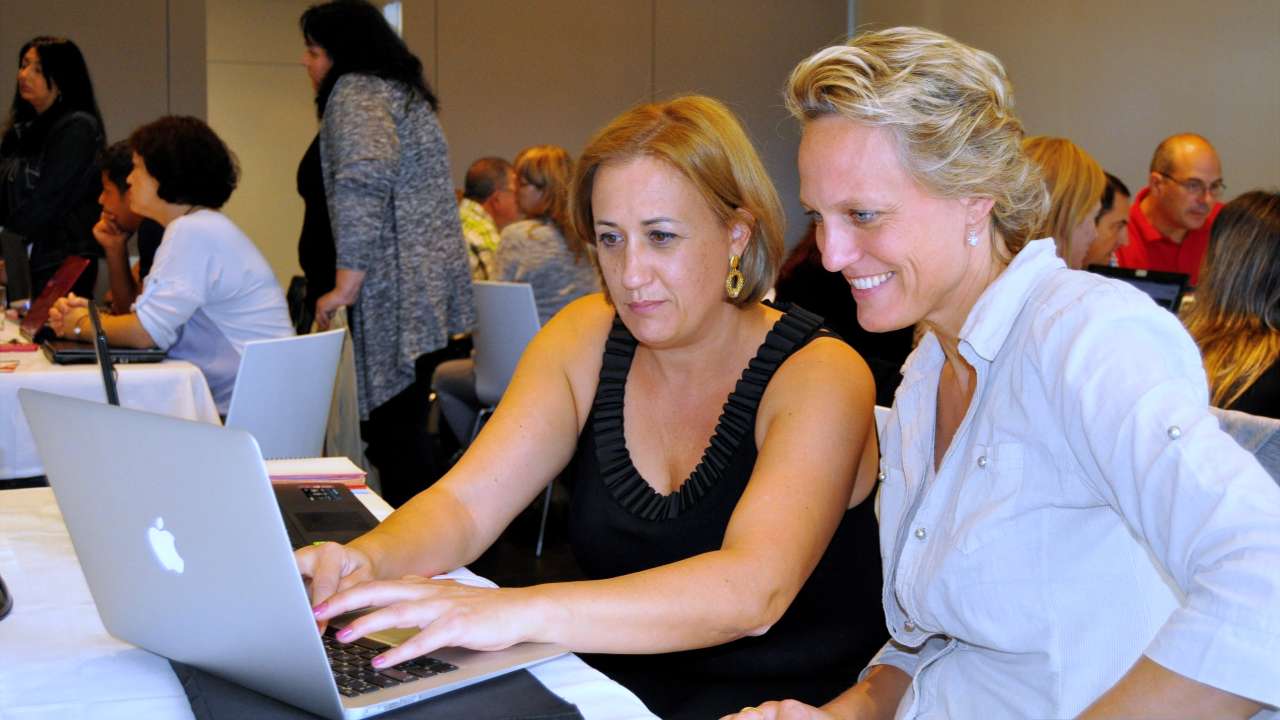
SFI (Svenska för invandrare) is a state sponsored Swedish language school where:
- you learn Swedish (obvs!)
- meet people in the same situation and maybe start growing a network
- quickly go from “hej” to “jag förstår vad du menar.”
It’s not glamorous, and it can be a little weird, especially for adults… but it gets you up and running and does open doors.
SFI (Swedish for Immigrants) is a government-funded language programme designed to help newcomers learn Swedish.
You will be placed in levels based on:
- your education
- your current language skills
It’s structured, but flexible
what you will learn
SFI focuses on practical Swedish, like:
- introducing yourself
- shopping, appointments, daily conversations
- workplace communication
- basic grammar and writing
It’s less academic, more “how to function in Sweden”
flexible study options
Depending on your city, you can choose:
- full-time classes
- part-time/evening classes
- online or hybrid
Perfect if you are working or job hunting
the social side
SFI is also where you:
- meet other internationals
- share experiences
- build your first network
Everyone is figuring things out just like you.
☐ Get a Swedish personal number (personnummer)
☐ Register your address in Sweden (folkbokföring)
☐ Find your municipality’s SFI
☐ Prepare your passport or ID
☐ Prepare your residence permit card (if applicable)
☐ Submit your SFI application online or in person
☐ Check your email regularly for updates from the municipality
☐ Attend your placement interview or language assessment
☐ Receive your class placement and schedule
☐ Choose daytime, evening, or distance classes if available
☐ Start attending classes regularly
☐ Practise Swedish outside class every day
☐ Use Swedish at shops, cafés, work, and appointments
☐ Combine SFI with work, internships, or volunteering if possible
☐ Continue to higher levels (C and D) after completing beginner courses
☐ Consider moving on to SAS (Swedish as a Second Language) after SFI
- It’s free, but you must be registered in Sweden (personnummer helps a lot)
- Quality can vary depending on location and teacher
- Progress depends heavily on your own effort outside class
- Waiting times may exist in some cities
- Attendance matters, don’t treat it too casually
- Combine SFI with real-life practice (shops, work, TV, etc.)
- Speak Swedish even if it’s broken, confidence matters more than perfection
- Use apps alongside (duolingo, babbel, etc.)
- Make friends in class, it helps motivation
- Don’t rely only on SFI, immerse yourself outside
↗ Apply for SFI (official info)
↗ Gothenburg
↗ Folkuniversitet
↗ Arbetsformedlingen
is SFI really free?
Yes, completely free through your municipality.
do I need a personnummer?
Usually yes, or at least to be registered in the system.
how long does it take?
Depends on you. It can be months to over a year.
is SFI enough to become fluent?
Not alone, you need practice outside class.
can I work while studying SFI?
Yes, many people do.